
“If you make a purchase using our provided links, we may receive a commission. Learn more here.
Living with breathing issues, I've come to rely on both a humidifier and a diffuser to keep my home comfortable, and friends often ask what the difference is.
Humidifiers add much-needed moisture to the air, while the diffusers fill it with refreshing essential oils. These are two very different roles with distinct benefits.
Which is the better choice for you? In this guide, I’ll clarify the differences and help you decide when each device is right for you.
Key takeaways
Humidifiers versus diffusers: The key differences

Diffusers cover a much smaller area
Diffusers are generally smaller and can’t cover very large areas.
I use a very small unit, which is just big enough for my personal workspace.
Humidifiers come in a wide variety of sizes, from small personal units to huge whole-house humidifiers, and can humidify large rooms and buildings.
That said, there’s a range of sizes available for both machines.
Pay attention to a diffuser’s or humidifier’s volume to match it to the size of your living space and get the most benefits.

Humidifiers improve air quality, diffusers don’t
Essential oil diffusers do not generally improve air quality. Instead, they only add scents and fragrances into the air.
Although some essential oils like eucalyptus have antibacterial properties, diffusers aren’t designed to enhance air quality.
In fact, studies have even shown VOCs are added to the air by essential oil diffusers.
Humidifiers, on the other hand, can improve the quality of indoor air but adding moisture to it.
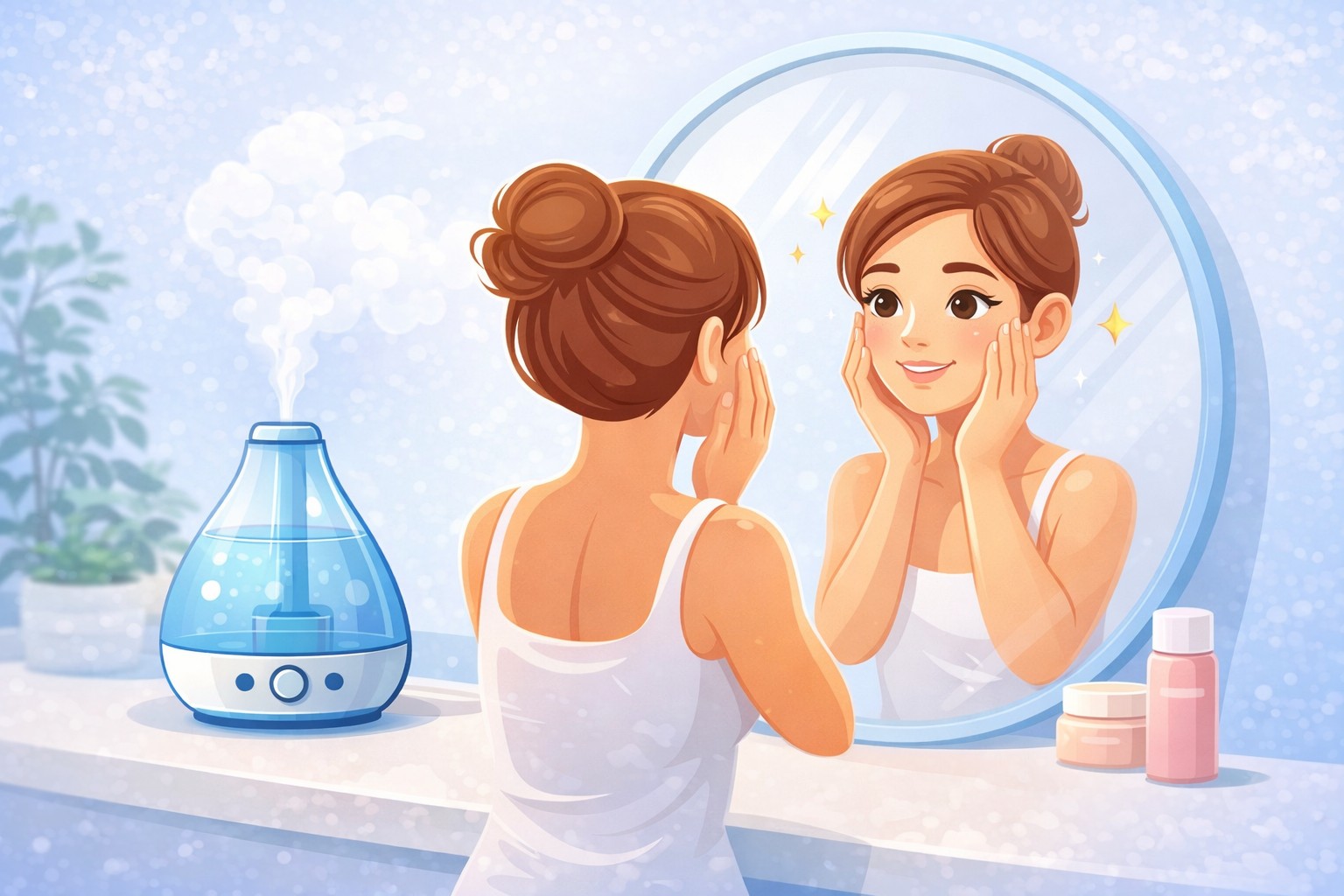
A humidity level between 30-50% can moisturize your airways, destroy airborne viruses, and reduce asthma and allergy symptoms.
I can breathe much easier with properly humidified air.
To find your ideal relative humidity, check out this chart I made.
Goal | Below 40% | 40% - 50 % | Over 60% |
|---|---|---|---|
Best for total home comfort | |||
Ideal for allergy sufferers | |||
Manage asthma symptoms | |||
Avoid respiratory illnesses | |||
Stop the spread of viruses | |||
Negate static electricity | |||
Discourage bacteria and mold growth | |||
Fight dust mites |
Diffusers have a high scent strength
I love my diffuser because it adds strong, lovely scents to my home. These machines are purpose-built to dispense fragrant essential oils into the air.
Basic humidifiers don’t produce scents because their goal is to build up the moisture level in dry air.
While there are a few humidifiers that have a built-in diffuser, I recommend never adding essential oils to your humidifier unless the manufacturer specifically notes that you can.
Important Note:
Any scents (good or bad) coming from your humidifier could be a sign of operational problems.
Both offer different health benefits
Both essential oil diffusers and humidifiers can provide health benefits — only in different ways.
A humidifier can bring you significant health benefits, including:
Meanwhile, you’re likely to see these diffuser benefits:
Diffusers can affect your mood
Diffusers win when it comes to influencing your mood. The essential oils used with a diffuser create a spa-like aromatic environment in your home that has been proven to help your mood.
My unit can really improve your mood, depending on the essential oil I use.
A humidifier only emits a fine mist or water vapor into dry air to increase moisture levels.
They don’t do anything in particular to improve your mood. That said, being able to breathe easier does make me a lot happier!

Humidifiers are larger
Diffusers and humidifiers are both available in many sizes for use in different rooms.
Humidifiers tend to be larger, though, since boosting the humidity in your home is a more intensive process than wafting scents around.
Let me illustrate this.
A diffuser’s water reservoir holds on average around 1-2 cups of water.
An average humidifier tank, on the other hand, has a volume of around one gallon.
Diffusers are cheaper comparatively
When it comes to humidifier versus diffuser price, diffusers tend to cost less than humidifiers.
They are generally smaller and simpler devices, which keeps their price low.
The retail price depends entirely on the unit’s size, volume, and additional features, though.
I’ve seen a high-end luxury essential oil diffuser with all possible bells and whistles costing triple or more than what a basic desktop cool mist humidifier does.
Humidifiers have a higher running cost
Humidifiers and diffusers both need electricity to run, which will add to your monthly utility bills.
However, humidifiers consume more energy on average than diffusers, and require more water.
Humidifiers tend to be larger and require regular filter changes, which adds to their running costs.
Unlike dehumidifiers, humidifiers and diffusers do not qualify to be Energy Star Certified, so don't be discouraged when you don't see the label on the box.
Learn more: Humidifier versus dehumidifier
Humidifiers are high maintenance compared to diffusers
Humidifiers need more maintenance than diffusers. That said, you should clean both units regularly. The EPA advises cleaning your device at least every third day.
The cleaning process is similar between both devices.
Humidifiers may require you to replace filters too or other consumable parts to maintain their effectiveness. It’s not a huge task, but still, more than you need to do with most diffusers.
Their respective hazards are different
Both kinds of devices have water tanks that could leak or spill, causing water damage.
If you don’t clean the tanks regularly, they could also get moldy and introduce spores or bacteria to the air in your home.
Humidifiers can increase the humidity level in your home too much.
Excessive moisture in the air can promote the growth of mold, bacteria, and dust mites that could cause respiratory issues.
I accidentally got my curtains moldy with my first humidifier. I highly recommend purchasing a humidifier with a built-in humidistat, or using a hygrometer to carefully watch your home humidity levels.
| Hygrometer | Humidistat |
|---|---|---|
Purpose | Measures humidity levels | Controls humidity levels |
Measurement capability | Gives real-time readings | Monitors and regulates based on set point |
Control capability | No direct control function | Can adjust devices |
Accuracy | High accuracy for readings | Moderate accuracy, focused on regulation |
Typical use | Monitoring indoor humidity | Automatic regulation of HVAC devices |
Cost | Low | Mid to high |
On the other hand, if your diffuser is too powerful for a small room, the overwhelming scent could cause headaches or breathing issues.
Additionally, you must be careful not to use essential oils that could bother allergy sufferers.

What do humidifiers & diffusers have in common?
Both can add moisture
Both a humidifier and a diffuser can add moisture to indoor air since they use water vapor.
However, humidifiers are designed specifically to boost moisture levels and will be far more efficient.
Diffusers add moisture only if the diffuser is an ultrasonic humidifying diffuser.
Both have disinfecting properties

Humidifiers can reduce the levels of viral particles because higher humidity levels make it difficult for viruses to survive.
Disinfecting essential oils, such as eucalyptus, lavender, geranium, lemon, clove, or thyme, can also destroy certain viruses when dispensed through a diffuser.
That said, neither device is intended to clean indoor air. I recommend looking into air purifiers to clean your home air.
Easy-to-use design is typical for both devices
Most modern diffusers and humidifiers have easy-to-use designs that make operating them a breeze.
Between auto shut-off functions, mist speed and volume controls, timer options, and accessible water or essential oil refill valves, it is easy to add one of these devices to your home.
They have a similar lifespan
Most humidifiers and diffusers can last anywhere from 5 to 15 years.
Your device’s lifespan will depend greatly on its brand, build quality, and how well you maintain it.
With proper cleaning and maintenance, you can enjoy the benefits of a high-quality diffuser or humidifier for years to come.
I recommend investing in a good unit because the cheapest available device can break within months or weeks.
What does an essential oil diffuser do?
Oil diffusers work to create a spa-like home environment with calming fragrances that can make it easier to breathe.
Different types of diffusers emit essential oils in different ways.
Nebulizing diffusers use pressurized air
A nebulizing diffuser forces a pressurized air stream through tubes containing essential oil, turning it into an oil mist that spreads into the room.
They create a cool mist because they do not use heat or water, so they are easy for busy homeowners.
Ultrasonic or humidifying diffusers
Ultrasonic diffusers send out a water-based oil mist. The diffuser has a vibrating plate that breaks the oil-laden water into a fine mist.
These machines can boost air moisture levels in small amounts.
Evaporative diffusers use a fan
An evaporative diffuser uses a fan to evaporate essential oils into the air in gas form.
This works well for people who are only interested in the scent of the essential oil (like me).
Heat or electric diffusers
A heat diffuser uses a heat source to warm and evaporate essential oils.
This kind of silent unit is less common. These devices can get too hot to be in rooms with children, so there are some safety concerns to be aware of.
Strengths and weaknesses of diffusers
Strengths
Weaknesses
What does a humidifier do?
A humidifier adds moisture to dry air and increases the overall humidity level in the room.
These devices are generally split into warm mist and cool mist humidifiers.

Warm mist humidifiers boil water with a heating element to produce steam vapor.
They can be very effective at humidifying a room but come with similar safety concerns as heat diffusers.
The most popular types of humidifiers are cool mist humidifiers, such as ultrasonic humidifiers and evaporative humidifiers.
Ultrasonic humidifiers are my favorites and work like ultrasonic diffusers — using a vibrating diaphragm to create water droplets.
Important Note:
Despite evaporative humidifiers having a filter, they are not intended to clean the air.
Evaporative humidifiers have a fan that blows air over a wet wicking filter to introduce moisture to the space.
Learn more: Ultrasonic versus evaporative humidifiers
Strengths and weaknesses of humidifiers
Strengths
Weaknesses
Are there humidifiers that are also diffusers?
Yes, there are aromatherapy humidifier/diffuser combinations that provide both a sweet, perfumed scent and add moisture to the air.
These combinations are often called aromatic ultrasonic humidifiers.
This kind of cool mist humidifier dispenses both water and essential oils in the mist it creates.
FAQs
Can you use a diffuser as a humidifier for plants?
No, you cannot use a diffuser as a humidifier for plants. Diffusers don’t increase air moisture enough to benefit plants.
Can you run a humidifier and diffuser at the same time?
Yes, you can run a humidifier and diffuser at the same time. I recommend keeping them at least two feet apart so that they don’t interfere with each other.
Can you sleep with a diffuser on?
Yes, you can sleep with a diffuser on. However, I recommend purchasing a unit with an automatic shut-off setting in case the device runs out of oil.
Do oil diffusers help you sleep?
An essential oil diffuser can help you sleep. Some people sleep better when they breathe in calming fragrances, such as lavender or eucalyptus, but others are not affected by the scents.